
A blank sheet of paper and a wild idea have started more legendary games than expensive studios ever did.
And in 2026, that’s not romantic nostalgia — it’s behavior.
Indie platforms are reporting record uploads of small experimental titles. TikTok is full of “made-this-in-a-weekend” board game prototypes pulling six-figure views. Cozy tabletop nights are replacing loud nights out. Phones go face down in the middle of the table. Someone says, “Wait, let’s tweak the rules.”
People don’t just want to play anymore. They want to create.
Somewhere between a family arguing over Monopoly rules and coworkers inventing a five-minute “meeting survival” game during slide 42, custom games are born.

Picture a rainy Saturday. Kids building a treasure hunt with handwritten clues. Friends turning a group chat into a chaotic trivia challenge. Someone testing mechanics in a Discord call at midnight. No computer science degree required. Just curiosity, structure, and the courage to test something that might flop before it flies.
This guide walks you through creating custom games from scratch — with practical methods, real-world tools, 2026 trends, and step-by-step ideas you can start tonight.
Ready to build something people actually want to replay?
Let’s start.
Creating Custom Games Basics and What It Really Means
Creating custom games means designing your own rules, goals, and systems instead of relying on pre-made templates.
At its core, it’s about shaping interaction.
Who competes?
Who cooperates?
What tension keeps players leaning forward?
What makes them shout, laugh, or demand a rematch?
In 2026, we’re living in systems all day — Slack threads muted but not left, Spotify “Liked Songs” playlists bloated past 7,000 tracks, TikTok drafts sitting unfinished, group chats archived but never deleted. We’re already managing rules and feedback loops constantly.
Game design just makes it intentional.
Even a homemade game can teach strategy, negotiation, emotional intelligence, and pacing. A simple treasure hunt teaches clue sequencing. A card bluffing game teaches risk tolerance. A timed drawing challenge teaches pressure control.
Every strong custom game has these core elements:
| Element | What It Does | Example |
| Goal | Gives purpose | Reach 10 points first |
| Rules | Create structure | Roll once per turn |
| Feedback | Shows progress | Visible score tracker |
| Challenge | Adds tension | Timed rounds |
| Rewards | Motivates | Badges, bonuses, unlocks |
Too many rules and players check out. Too few and it feels empty.
Start small. Test fast. Adjust based on how people actually play — not how you imagined they would.
A good game isn’t perfect. It’s playable.
And remember: game design is emotional design. If no one feels tension, surprise, or joy, something needs refining.
Creating Custom Games Ideas for Beginners
The fastest way to get better is to remove pressure.
In 2026, creators are leaning hard into low-fidelity prototyping. Messy drafts. Index cards. Sharpie rules crossed out mid-play. Because speed beats polish in the early phase.
Think of how people treat Instagram Close Friends stories now — rough, unfiltered, low-stakes. That’s the energy you want when starting.
Try one of these beginner-friendly ideas:
- Dice race with funny penalties
- Puzzle challenge with timed rounds
- Mini treasure hunt inside your home
- Role-play storytelling game
- Card swap strategy mini-game
- Speed drawing competition
- Memory match remix
- Obstacle course board game
- Mystery box guessing challenge
- Target toss scoring system
Keep it under 30 minutes.
Notice who gets confused. Who gets competitive. Who disengages and checks their phone. That’s feedback.
You don’t need graphics. You don’t need branding. You need a playable loop.
The first version should feel scrappy. That’s not failure. That’s momentum.
Creating Custom Games Tools and Platforms to Use
You can build powerful experiences with simple tools.
But the right platform shortens your learning curve.
Popular digital tools
- Unity – Flexible and powerful
- Godot – Lightweight, growing fast with indie devs
- Scratch – Ideal for kids and educators
- Tabletop Simulator – Digital board game prototyping
- Figma – UI mockups and layout testing
In 2026, more developers are also using AI-assisted coding tools to speed up repetitive tasks — not to replace creativity, but to reduce friction. The same way creators use Canva templates before customizing them.
Physical tools for tabletop creators
- Blank printable cards
- Standard dice and tokens
- Sticky notes for rule edits
- Whiteboards for rapid testing
- Craft materials for rough builds
The smartest strategy?
Build rough. Test early. Iterate fast.
Perfection slows you down. Feedback speeds you up.
Creating Custom Games Board Game Concepts
Board games are having a quiet renaissance.
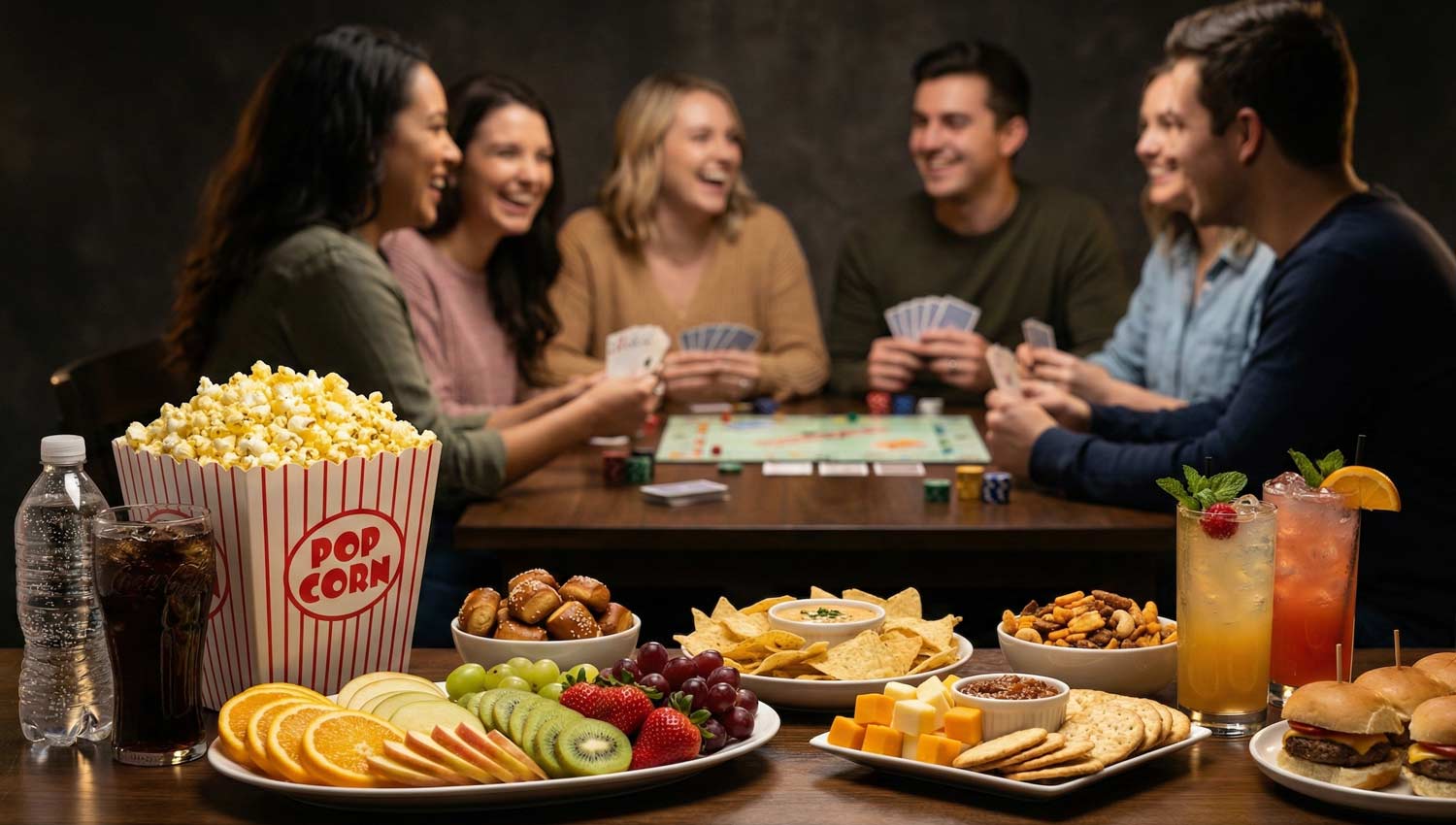
Phones stacked face down. Snacks everywhere. Background playlist running low. Someone says, “Okay wait, rematch.”
In a world of infinite scrolling, structured play feels grounding.
Here are concept sparks to build from:
- Fantasy kingdom conquest
- Railway empire builder
- Science lab escape
- Survival island strategy
- Detective mystery chase
- Space exploration race
- Dragon training adventure
- City-building competition
- Eco-balance simulation
- Medieval duel tactics
A strong theme answers one question:
Why should players care?
When mechanics and theme align, the game feels intentional instead of random.
If it’s a survival island, scarcity mechanics make sense. If it’s a detective chase, hidden information builds suspense. If it’s eco-balance, resource management should feel delicate.
Theme isn’t decoration. It’s emotional glue.
Creating Custom Games Video Game Concepts
Video games offer creative freedom — but complexity can overwhelm beginners.
In 2026, small-loop indie games are outperforming massive unfinished projects. Cozy mechanics dominate downloads. Minimalist visuals are trending over hyper-realistic overload.
Instead of building a massive open world, focus on one satisfying loop.
Ideas to explore:
- Endless runner with strange obstacles
- Minimalist puzzle adventure
- Pet simulator with upgrade trees
- Retro-style space shooter
- Brain-training mini games
- Sandbox builder
- Arcade racer
- Pixel platform jumper
- Reaction-based skill game
- Calm exploration journey

One strong mechanic beats ten average ones.
Think about the games people replay on flights. Or during a commute. Or when they’re “just taking a five-minute break” that becomes thirty.
Build depth through iteration, not scale.
Creating Custom Games Card Game Variations
Card games are one of the fastest ways to prototype a playable idea.
Small rule changes create huge strategic shifts.
Try variations like:
- Reverse scoring systems
- Power-up abilities
- Timed decisions
- Hidden role assignments
- Risk-based betting rounds
- Combo chain bonuses
- Bluff detection mechanics
- Dice-card hybrids
- Duel-style faceoffs
- Progressive deck building
Card games thrive because they’re portable and flexible.
You can test them at a kitchen table. In a classroom. Over a casual hangout. Even during a lunch break at work.
Frequent iteration builds strong design instincts.
And instincts matter more than aesthetics in early creation.
Creating Custom Games Party Game Themes
Party games aren’t about balance sheets. They’re about energy.
Less strategy. More chaos.
Think of how karaoke videos blow up on TikTok — not because they’re perfect, but because they’re fearless. That’s the mood.
Theme ideas:
- Comedy improv prompts
- Karaoke remix battles
- Dance-off challenges
- Trivia mashups
- Costume role-play
- Cooking chaos competitions
- Travel race scenarios
- Fantasy quest missions
- Game show parodies
- Murder mystery scenarios
Strong themes lower social barriers.
When people step into roles, they loosen up.
Design for connection, not just competition.
Creating Custom Games Rules and Mechanics Guide
Rules are the engine.
Clear rules keep players engaged instead of confused.
In 2026, attention is fragile. If instructions feel like terms and conditions, players mentally unsubscribe.
Design smarter rules:
- Keep instructions visual
- Introduce complexity gradually
- Test with brand-new players
- Remove unnecessary steps
- Use examples instead of long explanations
Popular mechanics to consider:
| Mechanic | Effect |
| Resource management | Strategic tension |
| Turn-based play | Fair pacing |
| Cooperative goals | Team bonding |
| Hidden information | Suspense |
| Time pressure | Urgency |
When rules feel intuitive, players stop thinking about structure and start enjoying the experience.
Confusion kills momentum. Clarity builds immersion.
Creating Custom Games Design Tips for Creativity
Creativity grows from remixing.
Many viral indie hits combine unlikely genres: cozy farming + horror elements, puzzle + dating sim, trivia + escape room tension.
Look at how Spotify users now build hyper-specific playlists like “songs that feel like walking home at 11:43pm.” That’s remix culture. That’s emotional curation.

You can apply that same mindset to game design.
Practical creativity boosters:
- Combine two unrelated genres
- Add light storytelling layers
- Limit your tools intentionally
- Observe how people naturally break rules
- Design around one emotional reaction
Constraints fuel innovation.
Limitations don’t shrink creativity. They sharpen it.
Creating Custom Games Common Mistakes to Avoid
Mistakes aren’t embarrassing. They’re data.
Common traps:
- Overcomplicated instructions
- No clear objective
- Ignoring player reactions
- Poor pacing
- Unbalanced scoring
- Too much downtime between turns
Watch body language.
Are players checking notifications?
Are they asking for clarification repeatedly?
Are they laughing at unintended moments?
That’s information.
One trap won’t show up in anyone’s body language. A 2026 study found that board game designers rate their own games as far more distinctive than experienced players do — same game, two very different verdicts on how fresh it feels.
So don’t answer “has this been done before?” by yourself. Ask your testers to name the closest game they’ve already played. If two of them say the same title in the first ten minutes, you’ve learned more than a week of solo tinkering would have told you.
If players look bored, confused, or frustrated — listen.
Simplify. Refocus. Re-test.
Creating Custom Games Steps to Start Today
Overwhelm disappears when structure appears.
Here’s a simple roadmap:
- Define one clear core idea
- Choose one simple mechanic
- Sketch rough rules
- Build a fast prototype
- Playtest immediately
- Simplify aggressively
- Repeat
Progress beats perfection.
Your first version should be messy. That’s the point.
You wouldn’t post a TikTok draft expecting cinematic perfection. You’d test, tweak, repost. Same energy here.
Creating Custom Games Trends and Popular Styles
Game culture in 2026 leans toward:
- Cozy, low-pressure play
- Cooperative multiplayer
- Narrative-driven mechanics
- Minimalist visuals
- Educational hybrids
- Short replayable loops
People are craving structured connection. Something tactile. Something shared.
Not everything has to scale. Not everything has to monetize.
Sometimes the goal is just this:
A table full of laughter.
A rematch request.
A friend saying, “Wait, that was actually fun.”
Trends inspire. They don’t define you.
Blend modern expectations with your voice.
That’s where originality lives.
Your 2026 Game Design Sprint: From Idea to “Rematch” in 4 Hours
In 2026, the gap between “I have an idea” and “It’s playable” has vanished. You don’t need to learn C# or hire an illustrator to see if your mechanic works. You just need a “Minimum Viable Loop.”
Step 1: Define the “Emotional Hook” (15 Mins)
Skip the 50-page lore. What is the one feeling you want?
- The Panic: A timer is ticking while players swap cards blindly.
- The Smugness: One player knows a secret the others have to guess.
- The Zen: Players work together to stack physical objects into a “sculpture.”
Pro Tip: If you can’t describe the “hook” in a single text message, it’s too complicated.
Step 2: Prompt Your “Logic Partner” (30 Mins)
Don’t stare at a blank screen. Use an LLM or a tool like Replit Agent to scaffold your math.
- For Board Games: “I’m designing a 4-player game about coffee shop management. Give me a balanced starting resource list for 3 different player ‘classes’ (Barista, Manager, Regular).”
- For Video Games: “Write a Python script for a 2D physics-based jumper where the gravity flips every 5 seconds.”
Step 3: Build a “Garbage” Prototype (60 Mins)
Physical or digital—keep it ugly.
- Analog: Grab a Sharpie and a deck of 99-cent playing cards. Tape over the faces. Write your rules directly on them.
- Digital: Use Figma or Canva to layout a basic board. Don’t worry about “Art”—use emojis as placeholders.
- Visuals: Use a 2-second AI image generator (like Nano Banana) to create a “Vibe Card” that sets the mood for your playtesters.
Step 4: The “Silent” Playtest (60 Mins)
Hand the rules to a friend. Do not speak. If they have to ask you “How do I move?”, your rule is broken.
- Watch their eyes. If they look at their phone, the pacing is off.
- The 2026 Rule: If it’s not fun with “garbage” graphics, better art won’t save it.
Step 5: Aggressive Simplification (45 Mins)
Look at your list of rules. Cut 30% of them.
- Does the game still work without the “Weather Phase”? Cut it.
- Is the “Level Up” system confusing? Make it a flat bonus.
- Goal: Frictionless entry. You want players to say “I get it” within 90 seconds.
Step 6: The Iteration Loop (Repeat)
In the age of TikTok and instant feedback, games aren’t “finished”—they’re “live.”
- Play.
- Break it.
- Tweak the prompt/rule.
- Play again.
Creating Custom Games: Final Takeaways
Creating custom games blends imagination with structure.
You’ve explored ideas, tools, mechanics, trends, and practical steps.
Now comes the only step that matters:
Start.
Not tomorrow. Not after more research.
Tonight.
Grab paper. Sketch rules. Test something imperfect.
The next memorable game doesn’t begin with funding. It begins with play.
Create something messy. Let people break it. Laugh when it fails. Improve it anyway.
Because the best games aren’t built in isolation.
They’re built in living rooms, classrooms, Discord calls, and rainy afternoons — one experiment at a time.
And sometimes, the most replayed game is the one that almost didn’t work — until you tried again.






Leave a Reply